
PanchAng
Considering time with light

The first time I really noticed time was when I saw the members of my family use the Mathrbhoomi malayalam calendar.
Printed on white, crackly thin sheets a little smaller than A2 in size, all of the text was in black except for Sundays, holidays, and festival days that were highlighted in red. I found these hanging on a wall or off the handle of a cupboard using a trademark red loop made from cotton thread.
I often wondered about and was drawn to the sheer volume of information provided on each sheet, on the side panels and all over the back. There were diagrams and tables and commentaries galore.
This calendar was used to identify the day my ‘star’ birthday would fall on in a given year, which meant I could look forward to new clothes and choosing my favorite payasam for dessert! Though I only knew to read and write in English at the time, it was not hard to figure out the form my ‘star’ would take on the calendar and identify this most auspicious of days myself!
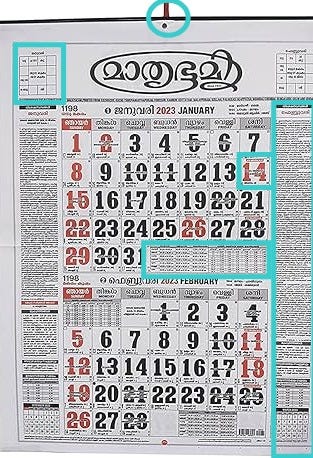
The members of my family revered this calendar. It travelled with them. It was consulted almost on a daily basis. It taught them new things & guided their actions. Much of it was also ignored - mostly because the ever dominant structures of modern life did not afford them the opportunities to understand and use this ‘Swiss Army Knife’ equivalent of a calendar tool for self-care.
In Charaka Samhita, कालः (kAlah, time) finds itself in one of six main protagonists that enable both happiness and unhappiness. These are: आत्मदेशकुलकालबलशक्ति
These six protagonists follow a prescribed order:
आत्म (Atma, self): Begin by knowing your self.
देश (desha, place): Situate yourself in your body (our first place), and in a place (room, house, neighbourhood, city, country, region, Earth, e.t.c)
कुल (kula, biological community): Be aware of what you’ve inherited from your family, starting with your parents, then grandparents, great grandparents e.t.c.
काल (kAla, time): Consider time - this is where we will focus in this series.
बल (bala, strength): Consider our abilities to act. For example, consider the parts of our body that help us stand straight & then evaluate the relative strengths of these parts.
शक्ति (shakti, the force): शक्ति is a tricky word to understand because we erroneously consider it a synonym of बल (bala, strength). This is why in my translation, I’ve drawn on the term much popularised by Star Wars (May the force be with you) that in its original form was conceived as शक्ति. Here, it refers to our capacity to act. For example, we might be able to lift a 5 kilo weight, however, ability by itself is not enough, we must also be capable to act. This capacity to act may be measured by our intentions, our knowledge & our skills.
Before we go further into how to consider time, I reiterate the need to see all six together. Just as we consider the three doshas together, we need to recognise how these six protagonists play together - sort of like Monica, Chandler, Joey, Ross, Rachel and Phoebe! On their own, they are quite ineffective; however together, they kept a lot of people enthralled for 10 seasons!
Apart from my brother and me, there was one other in our family who could not read / write in Malayalam and that was my Dad. Never one to complain about being left out, my Dad instead took action and brought home something that looked like this:
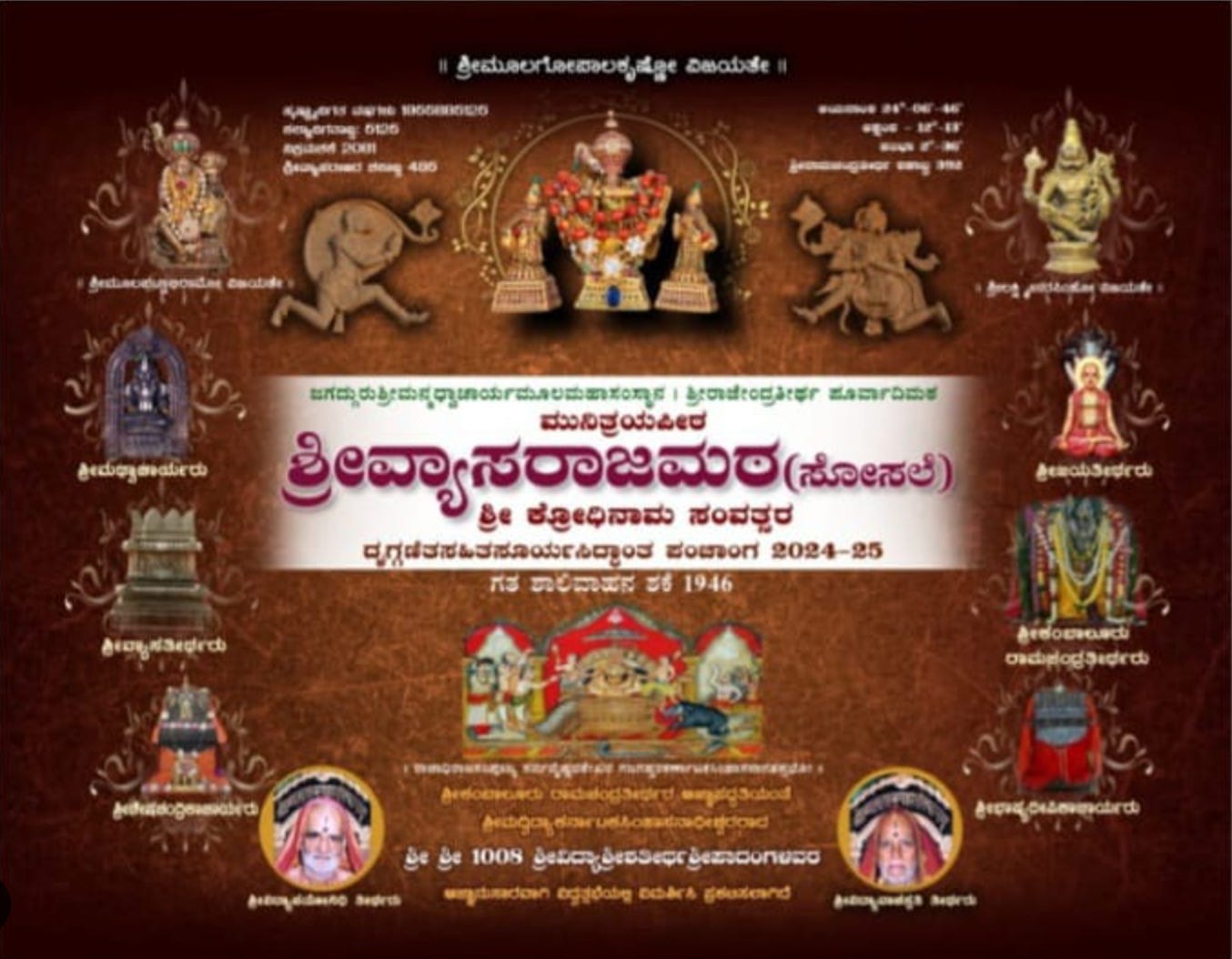
I too have adopted the same both in English and for extra learning in Sanskrit too:
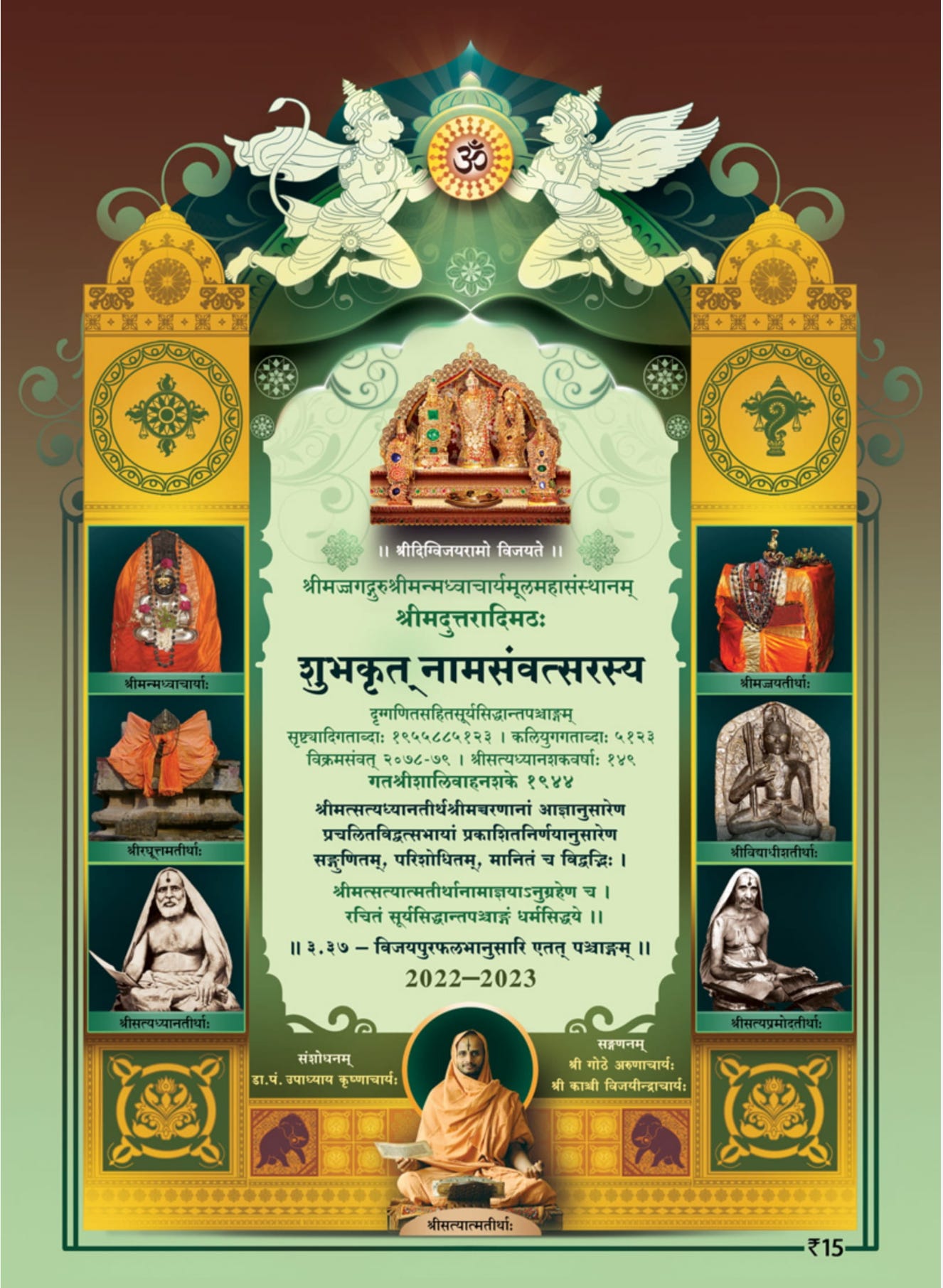
Each volume, published each year, is full of information and lessons that will take multiple lifetimes to master and yet, this tradition continues, year on year, helping us consider time in ways that promote self-care. Not a day goes by when I am not in awe of this publication & the intentions & efforts of the amazing people behind it.
I too now revere my पञ्चाङ्ग (panchAng, five parts / calendar) as did my parents and grandparents. I await its’ publication each year, and use it everyday.
Back to the future:
If we wanted to learn how to swim, we would not choose to jump into an ocean, now, would we? Similarly, if we want to learn how to consider time, we need to hide the many layers of complexity and focus on the basics. This is perhaps why our calendar was aptly named पञ्चाङ्ग - ie, five parts, reinforcing the basic method to consider time.
Let’s consider what these five parts are first:
दिन (dina, day):
The time between two consecutive sun rises is called a दिन. Each ग्रह (graha, planet in Jyotish (Vedic astronomy)), of which there are seven, make up seven days: रविवासर, सोमवसर, मङ्गलवासर, बुधवासर, गुरुवासर, शुक्रवसर and शनिवासर. Here वासर is the common denominator and means day (of the week). A पञ्चाङ्ग (panchAng, five parts / calendar) will begin the week with रविवासर because रवि is the दिनकर (dinakara, maker of the day).
नक्षत्र (nakshtra, star):
The second part of the पञ्चाङ्ग is नक्षत्र - which in Sanskrit means star, a point of cosmic light. One nakshtra is the distance travelled by the Moon in one day. There are 27 nakshtras. The time the Moon takes to traverse all 27 nakshtras make up a month.
With these first two parts, the पञ्चाङ्ग establishes the two biggest sources of light and life - the Sun and how it travels in dinas; and the Moon and how it travels in nakshtras. Even in this definition, we might infer the main characteristic of these two luminaries and then relate this help understand ourselves. The Sun’s part is dina defined by sunrise which is consistent every day in the direction of the East. The Sun in our jataka (astrological chart) reflects our true self or आत्म (Atma, self) which is consistent and does not change. It also reflects our father. In contrast, the Moon travels from nakshatra to nakshatra in four phases: waxing, full moon, waning and new moon - alluding to a more transitory, fickle characteristic. In our jataka (astrological chart), Moon reflects our mind which is constantly changing. It also reflects our mother, and in doing so, speaks to the tailored care we only get from our mothers. Between the two, the vedas are quite clear - even if we choose to abandon our father, we cannot ever abandon our mother. Similarly even if we choose to ignore ourselves, we cannot afford to ignore our minds.
The remaining three parts of the पञ्चाङ्ग refer to the relationship between the Sun and the Moon. This relational aspect, to see everything as connected and in combinations with each other is a foundational thread to all vedic teachings.
तिथि (tithi, lunar day (of the month))
तिथि reflects the changing Moon from when it’s a thin sliver that grows into the full Moon, only to then shrink ever so slowly till it’s completely gone with the New Moon. The Sun and the Moon travel at different speeds, with the Moon being faster. This 12 degrees of separation per day is what is measured as a तिथि. There are 30 tithis, the most importants one being Poornima (full moon) and Amavasya (new moon).
करण (karana, half lunar day)
करण is half a tithi, means to do, perform, produce and create. Just as a day is made up of two parts, day and night; a lunar day is made up of two parts - ie, two करण. There are eleven karanas and are permuted to make up sixty-karana monthly cycle. For example, the second half of कृष्ण चतुर्दशी (the fourteenth tithi of the waning phase) is called Shakuni. For those of you familiar with the Mahabharata, it will not be difficult to infer the meaning of this time.
नित्ययोग (nitya yoga, daily angle formed between the Sun and the Moon))
The last part of the पञ्चाङ्ग is a beautiful relationship - नित्य means constant and योग means combination - so in its name is the meaning of what we consider as one of the five parts of time. These combinations of the Sun, the very constant, and the Moon, the ever-changing are captured as twenty-seven nityayogas. For example, the twentieth yoga is called shiva and this time is considered auspicious which is the meaning of the word ‘Shiva’.
As I reflect on these five parts to consider time, it is clear that considering time is akin to considering all that emanates light. As we approach deepavali / diwali, the festival of light, let us consider how we might grow this attention by considering time in a पञ्चाङ्ग.